
Open-Source Intelligence (OSINT) & Alternative Data
What Open Source Intelligence & Alternative Data Is And How It Can Be Used


In today's data-driven world, internal information sources are no longer enough. Open Source Intelligence (OSINT) and Alternative Data have emerged as game-changing tools for decision-makers across industries.
Open-source intelligence (OSINT) encompasses publicly available information including news articles, social media posts, economic and governmental data, 10K filings, earnings reports, and Google search trends—essentially anything freely accessible that can provide market intelligence.
Alternative data includes harmonized signals from web traffic, transactional patterns like shopping and spending behaviors by region and consumer type, satellite imagery for regional growth analysis, and proprietary datasets that reveal market dynamics invisible to traditional research methods.
Together, these data streams create what traditional expertise and internal data alone cannot: a real-time understanding of market forces, emerging trends, and strategic opportunities that most organizations miss entirely.
The key difference
Alternative data and Open-Source Intelligence (OSINT) are two different types of data that companies can use to gain insights into emerging trends and changes in the market. Alternative data is private and not publicly available, while OSINT is technically free and accessible. However, in most cases, it makes sense to buy OSINT data formatted and cleaned to enable faster analysis. When combined, these data points can provide an additional layer of insights that are impossible with internal data alone. By combining both types of data with internal data, companies can gain a 360-degree view of everything happening in the market, which is the holy grail for firms seeking to make informed decisions.
Advantages
From the European Commission to Walmart to HSBC, my first move when building AI and data programs was always the same: establish robust open-source intelligence and alternative data capabilities. This wasn't just about technology—it was strategic.
This approach consistently delivered multiple advantages:
Access to insights and AI applications without getting trapped in internal approval cycles or waiting for complex backend systems to come online
When people see tangible outputs quickly, data programs maintain their energy and avoid the death spiral that kills so many data initiatives waiting months for results. Insights on any topic from OSINT can be immediately collected and acted on.
Save resources and time by finding patterns between products, events, markets, trends, and people of the world’s collective knowledge before deciding what to prioritize and invest in.
Less prone to bias, more contextual, and faster than heuristics - you are looking at all the information on a topic including peripheral opportunities and risks
Intelligence is cheaper and quicker than internal data, business expertise, or external consultants (unless those consultants, such as bridge_ci, understand OSINT and alternative data at an elite level, which few do).
OSINT You Can Use Immediately
Once the data is in place, it’s possible to implement a technique I call a “domain analysis,” which uses machine learning and augmented intelligence tools to analyze the massive amounts of data from OSINT, alternative, and internal data when available. The technique can be used in simple or complex situations and will enrich any strategic decision in as little as one hour.
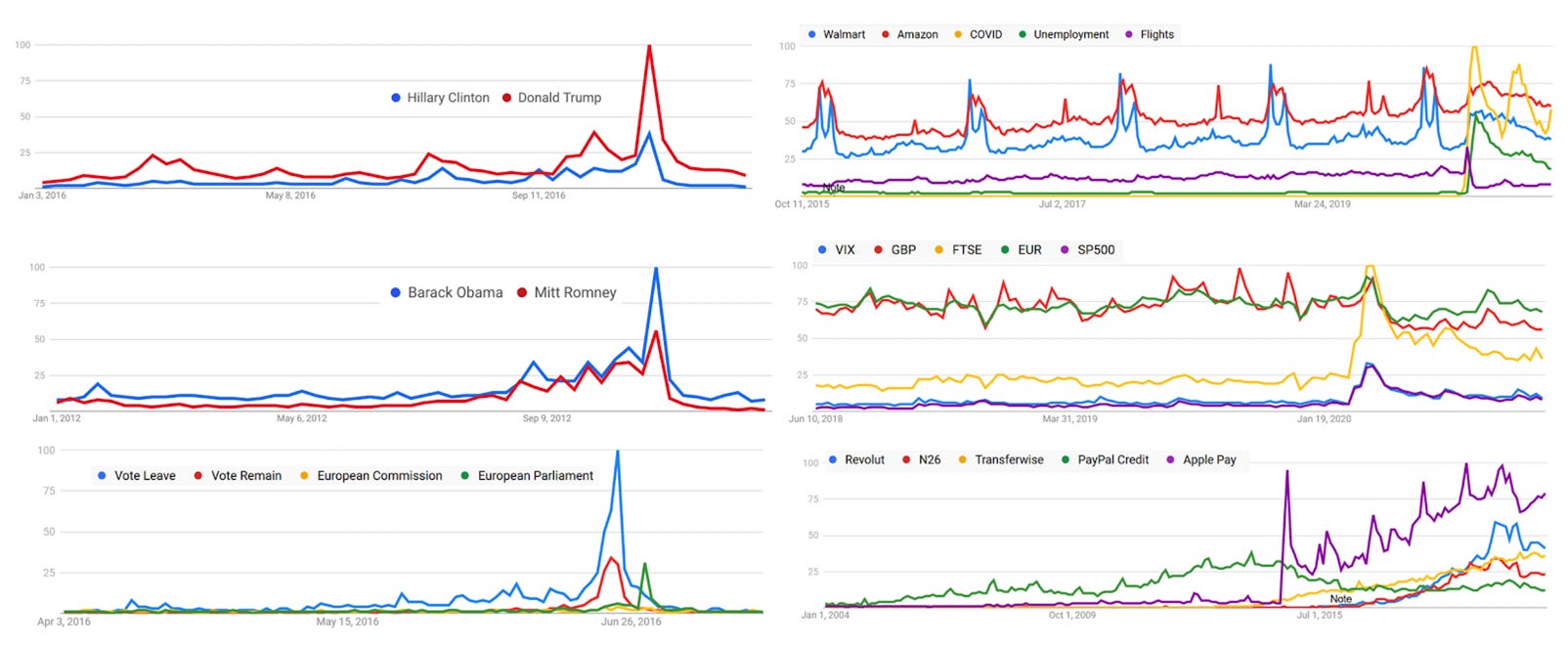
Google Trends is my first go-to in all cases. It’s simple, quickly allowing users to compare the relative search volume of searches between two or more terms. G Trends is a free tool and is an excellent example of open-sourced intelligence by a corporation. Search volume is extremely predictive in politics, retail, and finance - as it can be used as a leading, not lagging, indicator. One technique that can be valuable is looking at how different topics/keywords contrast or correlate to one another, i.e., holidays, flights, credit cards, and mortgages. Often businesses look at these products in siloes when a variety of factors influence them. Google trends can quickly quantify those hypotheses, especially for macroeconomic themes. Additionally, Google Trends has been deadly accurate in predicting electoral outcomes where the polls have failed, showing both Brexit and Trump coming out on top.
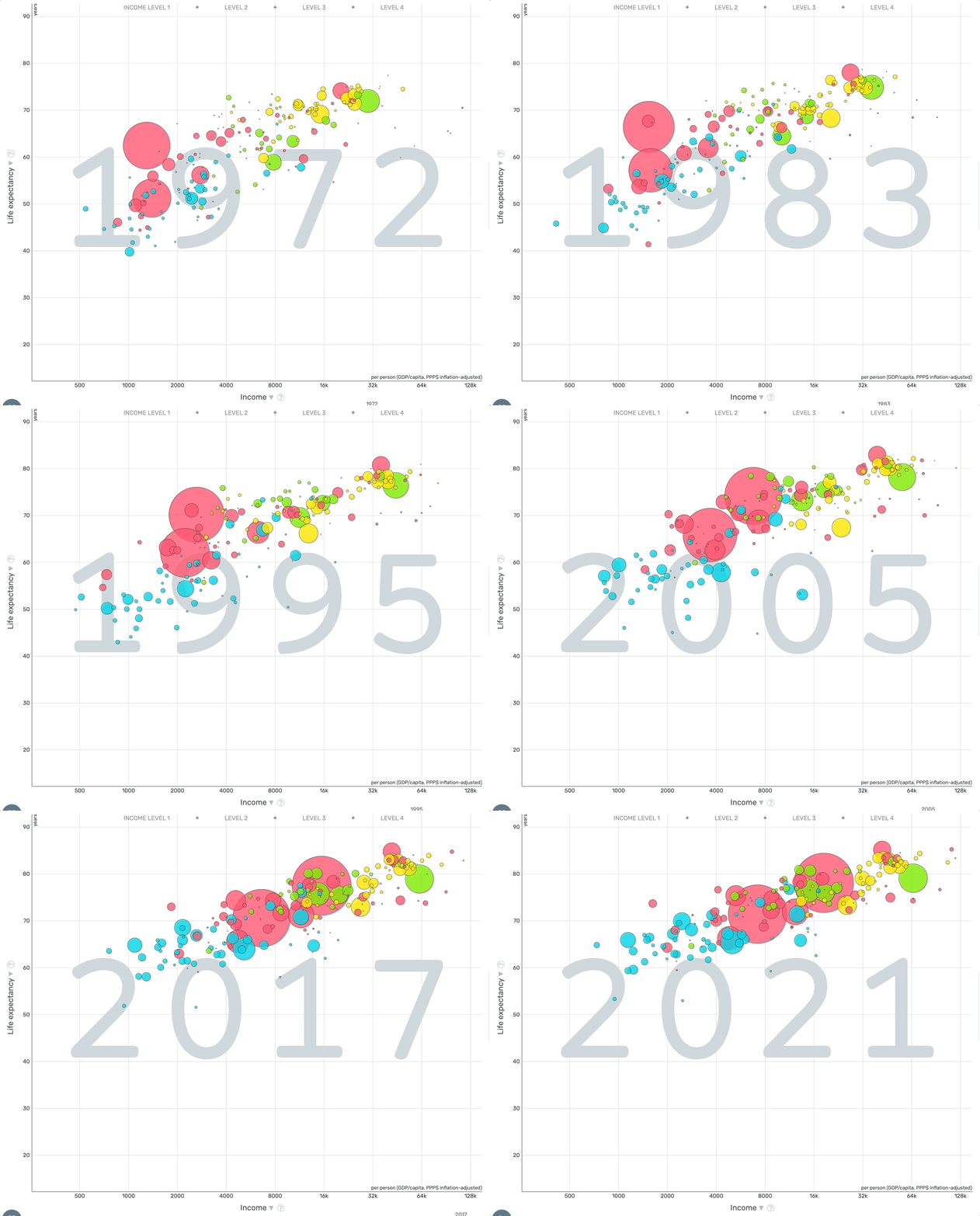
Governments and International Organizations. The World Bank and Eurostat offer data on a variety of topics, including economic indicators, social indicators, and environmental indicators. Nonetheless, I’d suggest using Google Public Data Explorer, which aggregates all these data in one place and offers great visualization tools based on the legendary Hans Rosling’s Gapminder - also a great resource (below). Moreover, open-source data can be found on the U.S. open data portal and in numerous other open-source repositories like Kaggle, where you can find datasets for anything from natural language processing to computer vision.
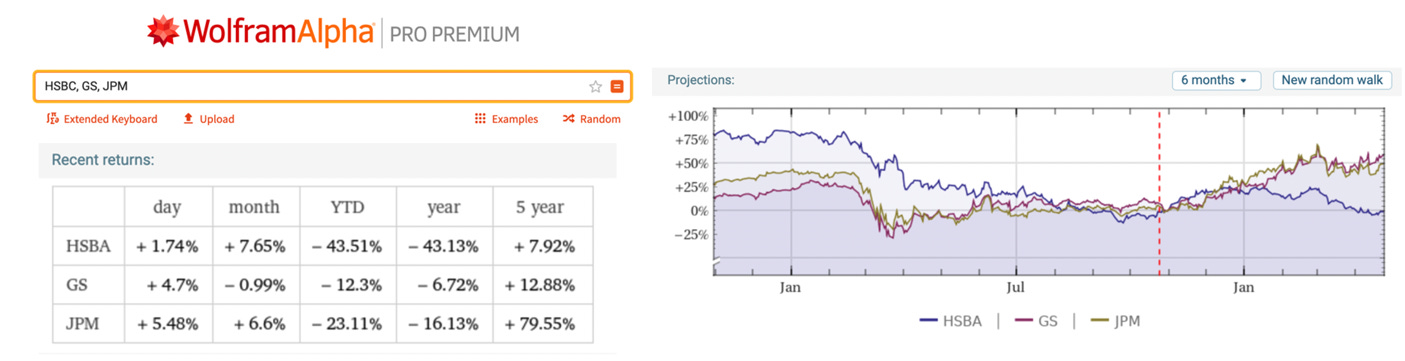
Wolfram Alpha is a computational tool that provides data on various topics such as GDP and population growth. It also contains information about entities such as companies, places, and markets. Unlike a search engine, it answers factual queries directly by computing the answer from externally sourced "curated data." This makes it a reliable source for accessing Morningstar data, as well as projections. The current projections show a downward trend for HSBC and an upward for GS and JPM. These trends are good news for people in corporate strategy or investments.
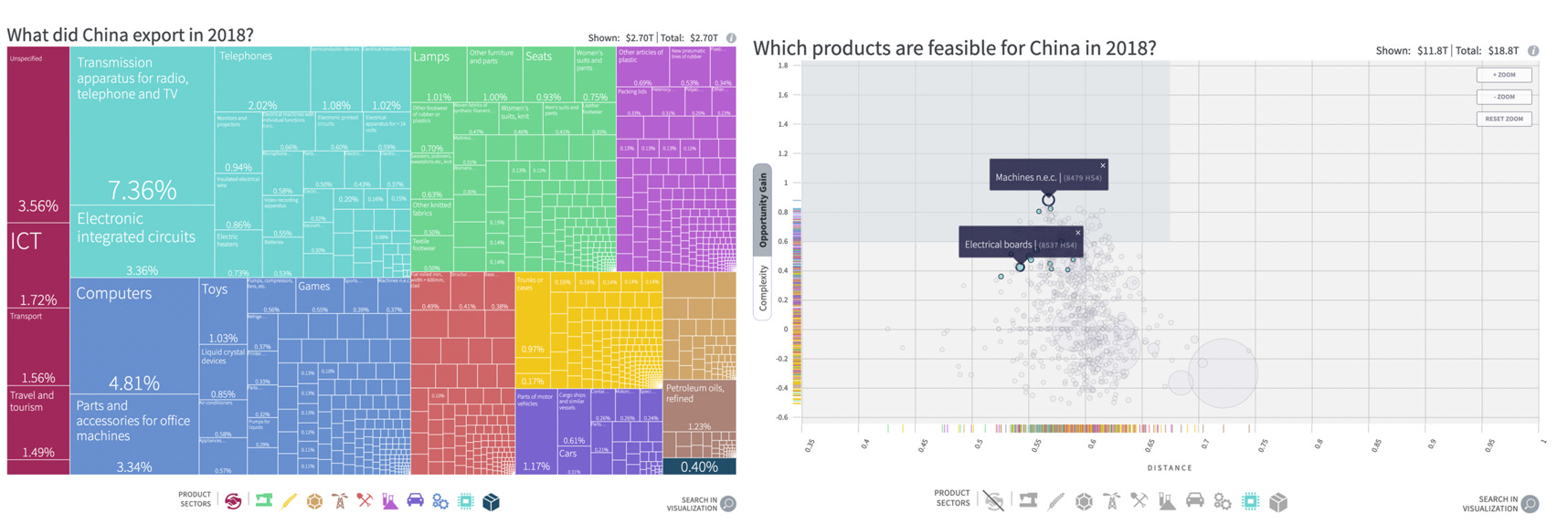
The Globe of Economic Complexity shows the true scale of the world economy. It visualizes 15 trillion dollars of world trade. One node equals 100 million dollars of exported products and shows how those product spaces and countries are interconnected. It's the best example of economic data and complex systems visualized in their full reality. If you are unfamiliar with graph analytics, look at the Atlas of Economic Complexity, which the examples below are from.
360 Degree Intelligence
While OSINT and alternative data alone deliver cutting edge insights the major breakthrough happens when you integrate OSINT and alternative data sources with internal data.
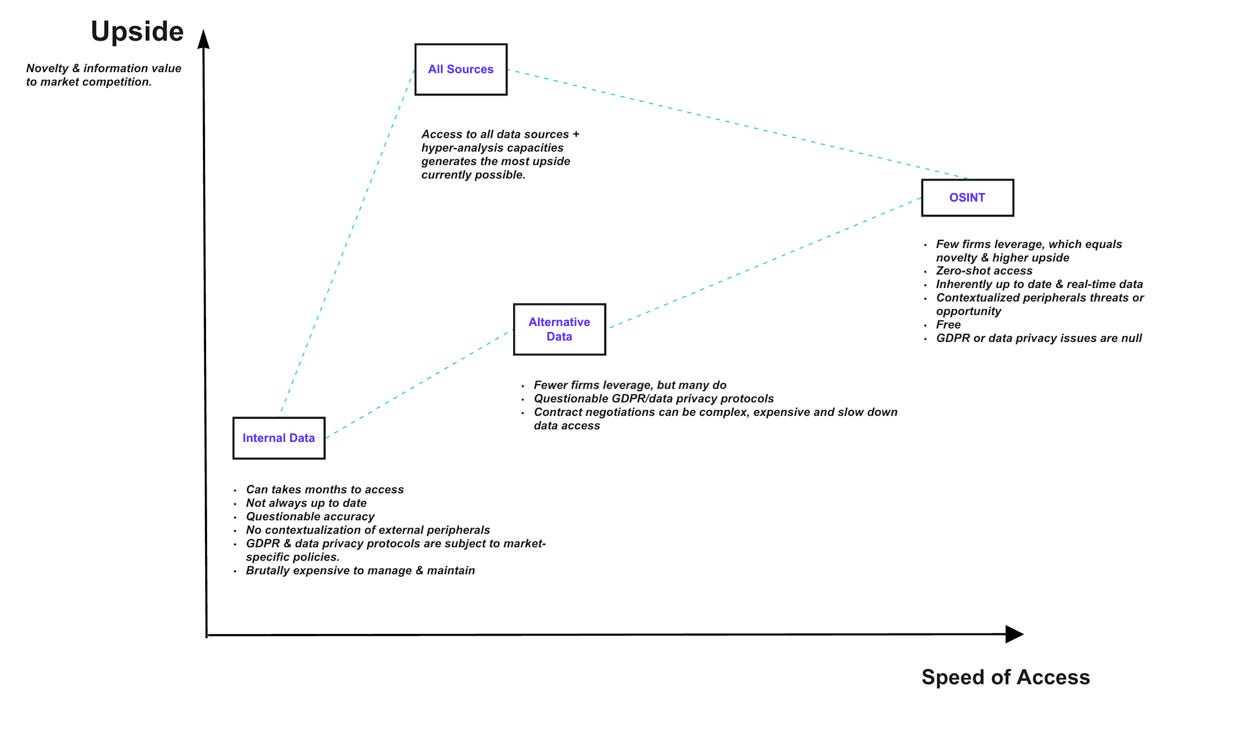
This synthesis enables data-driven strategies and decisions that precisely align with market opportunities and risks, achieving unprecedented speed and contextual understanding that surpasses what can be accomplished through internal data, the latest LLM, expertise, or intuition. By combining both types of data with internal information, organizations gain a 360-degree view of everything happening in the market.
Conclusion
The competitive reality is stark. While most organizations debate governance frameworks and wait for perfect data architectures, those leveraging OSINT and alternative data are already extracting actionable intelligence from billions of data points—news articles, social media, economic indicators, corporate filings, and signals that reveal what's actually happening in the world beyond corporate walls.
If you want to learn more about OSINT or have any questions feel free to reach out. I am passionate about this subject and helping firms get the most out of these technologies.
 | A guest post by
|